
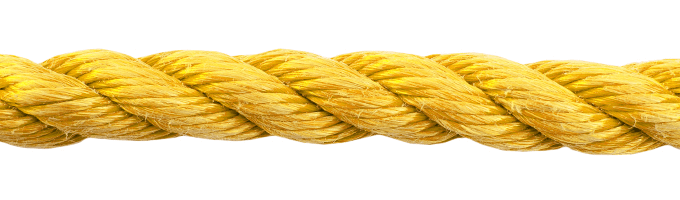
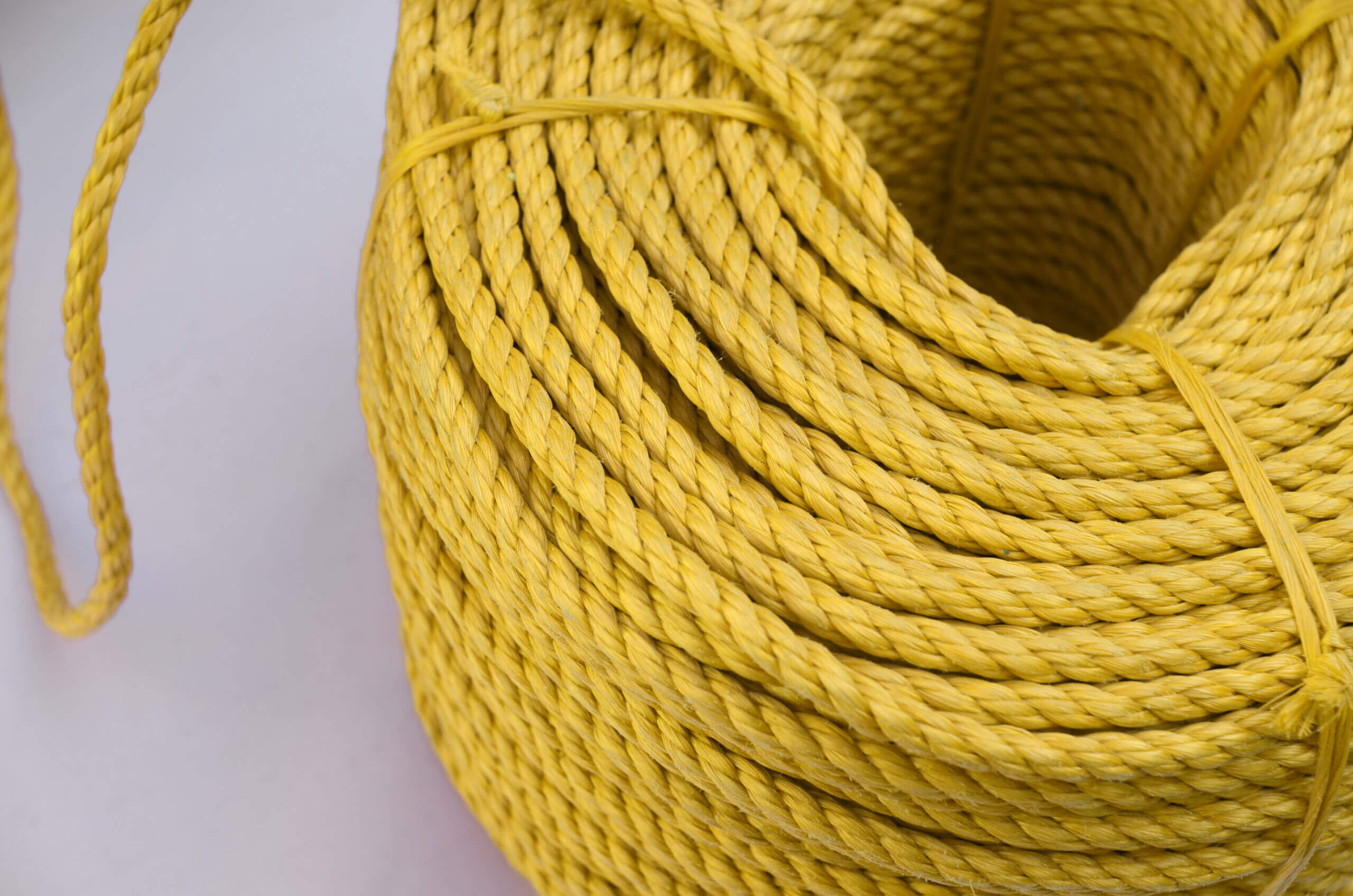
Polypropylene ropes they are made of synthetic polypropylene fiber, which is formed from a melt of polypropylene. These ropes are superior polyamide ropes in terms of elasticity and resistance to double bends, but they are inferior in terms of abrasion resistance. Recently, polypropylene ropes have become widely used in the navy, replacing the traditional ones hemp ropes, as well as actively used in construction, fishing, agriculture, when towing service and mounting goods and public transport.
Advantages of polypropylene ropes:
- Good elastic and electrical insulation properties.
- Ease of use and positive buoyancy "the ropes don't sink in the water.
- Non-hygroscopicity - ropes do not absorb moisture, which is important in high humidity conditions.
- High resistance to acids, alkalis and organic solvents.
- Durability when used in aggressive environments.
Disadvantages:
- Fluidity under load - ropes can stretch and lose their shape.
- Low resistance to solar radiation (UV light), which may lead to a decrease in strength.
- Low thermal stability - ropes can be damaged at high temperatures.
- Nodes on polypropylene ropes they are prone to spreading, so for reliability they need to be made double ones.
Application areas:
- Shipping services: replacement of traditional hemp ropes.
- Construction: ropes are used for various applications lifting operations and fixing structures.
- Fishing industry: for making fishing gear.
- Agricultural industry: for transportation and attachment of various equipment.
- Towing and transportation of goods.
Technical specifications:
| Diameter (mm) | Bay weight 220 m (kg) | Breaking load (kGf) |
|---|---|---|
| 6 | 3.4 | 480 |
| 8 | 6 | 845 |
| 10 | 10 | 1240 |
| 12 | 14 | 1770 |
| 14 | 19 | 2440 |
| 16 | 25 | 3020 |
| 18 | 31 | 3850 |
| 20 | 38 | 4640 |
| 22 | 46 | 5560 |
| 24 | 55 | 6500 |
| 26 | 64 | 7620 |
| 28 | 75 | 8560 |
| 30 | 85 | 9780 |
| 32 | 97 | 10760 |
| 36 | 120 | 13560 |
Polypropylene ropes - it is an ideal choice for a wide range of applications due to their combination ease of use, positive buoyancy and high chemical resistance. However, to ensure long-term and reliable operation, it is important to take into account such features as fluidity under load and low resistance to solar radiation.
